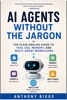
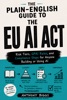
Everyone's talking about AI agents. Almost no one's explaining what they actually are.
If you've ever sat through a meeting where someone said "agentic workflow" and quietly wondered what on earth they meant, this book is for you. It's the plain-English tour of AI agents you've been waiting for, written for smart, curious people who don't want a textbook, a sales pitch, or a wall of code.
You'll meet the agents that write code, read the internet, answer customer emails, and book your meetings. You'll see how they actually work under the hood, the language model brain, the tools, the memory, the loop that ties it all together. And you'll learn how to spot the difference between a real breakthrough and yet another demo dressed up as one.
Inside this book, you'll learn how to:
Tell a chatbot, a copilot, and an agent apart, and know when each one is the right choice
Understand the agent loop (observe, think, act) without needing a computer science degree
See how tool use, memory, and retrieval turn a chat window into something that can actually get things done
Spot the real risks, hallucinations, prompt injection, runaway costs, and know how to manage them
Decide when to build your own agent, when to buy one off the shelf, and when to borrow what already exists
Hold your own in conversations about MCP, ReAct, RAG, and the rest of the agent alphabet soup
Prepare for the part of your job that's about to change and the part that isn't
Written in the same friendly, jargon-light style that's helped millions of readers get comfortable with new technology, this book takes you from "I have no idea where to start" to "I've got this". One short, clear chapter at a time. There's no code you need to run, no math you need to do, and absolutely no condescension.
Whether you're a product manager trying to scope your first agent feature, a consultant who needs to sound credible on a client call, or simply a curious person who's tired of nodding along, this book gives you the clear, conversational guide the AI industry never quite got around to writing.
Open the sample and start reading.